Amr bil Maroof: Encouraging Good for Class 8 Pupils
Amr bil Maroof means encouraging good and discouraging wrong. For Class 8 pupils, it does not mean policing classmates or lecturing everyone you meet. It means using wisdom, kindness, and good timing to support what is right and gently resist what is harmful. This guide explains encouraging good and discouraging wrong with wisdom, kindness, and timing. You will learn when to speak, when to act by example, and when to seek help from a teacher or parent. The aim is a school where good behaviour is noticed, supported, and copied, not forced. Keep your STBB book nearby and discuss the examples with your teacher.
What Encouraging Good Means
Encouraging good means noticing right behaviour and supporting it. When a classmate shares notes, returns a lost item, or helps a shy pupil, a kind word strengthens that habit. Encouragement does not need to be loud. A simple thank-you or a quiet word of praise often matters more than a public announcement.
Encouraging good also means setting a good example yourself. Pupils copy what they see more than what they hear. If you queue fairly, speak politely, and complete your work honestly, others are more likely to do the same. Example is the gentlest and most powerful form of encouragement. The solved notes can help you revise this lesson's meaning.
- Notice good behaviour and praise it sincerely.
- Set a good example through your own conduct.
- Support pupils who choose the right action.
- Keep encouragement kind, not boastful or controlling.
Wisdom: Choosing the Right Moment
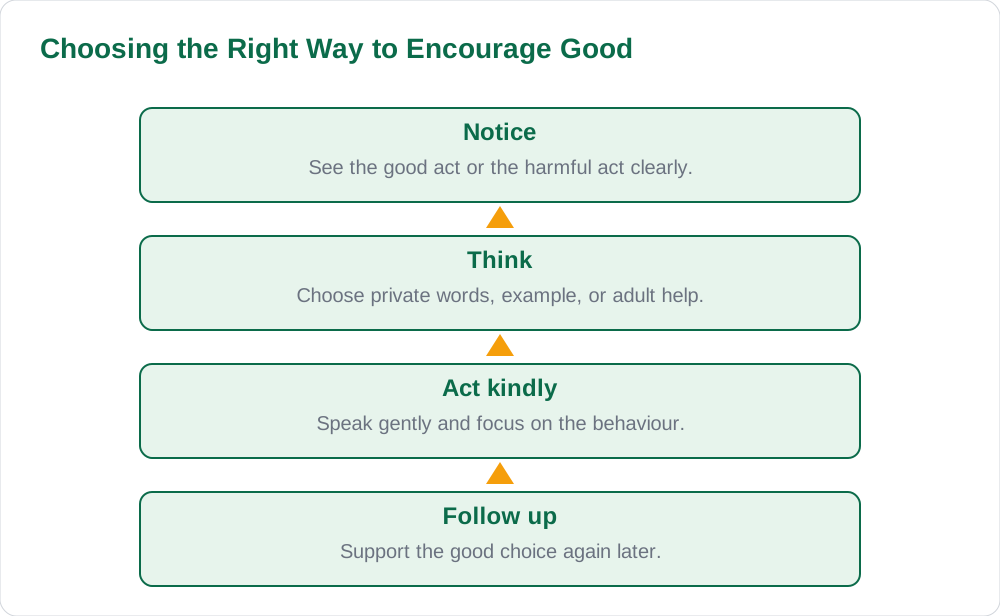
Wisdom means choosing the right moment, place, and words. Correcting a classmate loudly in front of everyone can cause embarrassment and defensiveness. A private, calm word after class often works far better. Ask yourself: will my words help this person change, or will they only shame them?
Timing also means knowing when not to speak. If tempers are high, wait until everyone is calm. If the matter is serious, such as bullying or danger, do not wait for a perfect moment; seek a teacher at once. Wisdom balances patience with responsibility, and it grows with practice and reflection.
Kindness: Correcting Without Hurting
Kindness in correction means focusing on the action, not attacking the person. Say, copying homework harms your learning, rather than calling a classmate dishonest. Offer a better option, such as studying together or asking the teacher for help. People accept correction more readily when they feel respected rather than judged.
Kindness also means accepting that you may be wrong. Listen to the other person's explanation before concluding. If you made a mistake in judging them, apologise honestly. Gentle correction preserves friendship and keeps the door open for future change. For more on fair conduct, read the books and the blog.
- Focus on the action, not on attacking the person.
- Offer a better option, such as studying together.
- Listen to the explanation before concluding.
- Apologise if your judgement was mistaken.
Discouraging Wrong Safely
Discouraging wrong does not require confrontation. You can refuse to join harmful behaviour, walk away from it, and suggest a better activity. If friends tease a pupil, you can change the subject, invite the pupil to join you, or say plainly that the teasing is unfair. These small actions break the pattern without creating a fight.
For serious wrongs, such as bullying, cheating rings, or unsafe behaviour, tell a trusted teacher or parent. Reporting is not tale-telling when it protects someone. A responsible pupil seeks adult help rather than trying to handle danger alone. Safety always comes before pride or peer pressure.
Encouraging Good in Your Class
You can encourage good in your class through steady habits. Thank pupils who help, praise honest effort, and welcome newcomers. Start a small study group, keep the classroom tidy, and support fair games. When good behaviour becomes normal, fewer pupils feel tempted to copy harmful behaviour.
Encouragement also means supporting yourself. If you slip, correct the mistake and try again rather than giving up. A class improves when each pupil takes responsibility for one good habit. The companion guide on justice and fairness shows how fairness supports the same goal.
AI Help: Muse AI
Muse AI is Meta's personal AI assistant, and it can help you practise Amr bil Maroof by drafting kind, private words for encouraging a classmate or discouraging a harmful habit. Muse AI does not give official STBB answers — always verify against your STBB book and your teacher. Always check any lesson summary against your Sindh Textbook Board book before using it in class.
Join Muse with invite code LTGSWD — in the Muse app, go to Settings > Redeem token and enter the code.
Disclosure: LTGSWD is the author's Muse invite code.
5 key points you must know
- Amr bil Maroof means encouraging good and discouraging wrong with wisdom and kindness.
- Good example is often stronger than lectures or public correction.
- Private, calm words usually work better than public shaming.
- Kind correction focuses on the action and offers a better option.
- Serious wrongs need a trusted teacher or parent, not solo confrontation.
Frequently asked questions
What does Amr bil Maroof mean for Class 8 pupils?
It means encouraging good and discouraging wrong through example, kind words, good timing, and seeking adult help when the matter is serious.
Should I correct a classmate in front of everyone?
Usually no. A private, calm word after class is kinder and more effective than public correction, which can embarrass and harden the person.
How do I discourage wrong without fighting?
Refuse to join it, walk away, suggest a better activity, support the affected pupil, and tell a teacher if the behaviour is serious or unsafe.
Is reporting bullying tale-telling?
No. Reporting bullying or unsafe behaviour to a trusted teacher protects someone and is a responsible form of discouraging wrong.
Solved notes — preview free
These guides work best with the solved exercises. Preview the solved notes free on this website — 119 solved notes for Classes 6–10 in Sindhi, Urdu, English and Arabic medium. Or browse the full solved notes catalogue for your class and medium. New solved notes are added regularly — check the catalogue for coming-soon books.