Digital Citizenship and Cyber Etiquette for Pupils
Being online is like living in a town: you meet people, share news, borrow ideas, and leave traces of where you have been. A good citizen of that town is polite, honest, and careful, and the same is true online. Learning digital citizenship cyber etiquette pupils need means learning how to message respectfully, how to use other people's work fairly, how to check facts before forwarding them, and how to leave a digital footprint you will be proud of. These habits matter as much as any technical skill, because they decide what kind of person you are online.
What Is Digital Citizenship?
A digital citizen is a person who uses technology responsibly, respectfully, and safely. Citizenship has two sides: rights and responsibilities. You have the right to learn, speak, and enjoy yourself online, and you have the responsibility not to harm others, not to steal, and not to spread lies. Cyber etiquette, sometimes called netiquette, is the manners side of citizenship: the everyday habits of polite behaviour in messages, comments, and group chats.
Good digital citizenship is not about rules posted on a wall. It shows in small choices: pausing before you send an angry reply, giving credit when you borrow an idea, and refusing to forward a rumour. Pupils who practise these choices become the classmates others trust online, and that trust is worth more than any number of followers.
Respectful Messaging
Messages lose the tone of voice, facial expressions, and gestures that soften face-to-face talk, so words online land harder than you may intend. A joke that sounds light in person can read as cruel on a screen. Before sending a message, read it as the receiver will read it: cold, without your smile, and possibly read by others too. If a message could hurt, reword it or do not send it.
Respect also means respecting time and attention. Do not send many messages in a row when one will do, do not add people to groups without asking, and do not message late at night expecting instant replies. When you disagree with someone, argue with the idea, not the person, and never post personal details about someone else to win an argument. A calm, polite message keeps your reputation safe even when you disagree.
- Read your message as the receiver will read it, without your tone of voice.
- Argue with the idea, never with the person.
- Do not add people to groups without asking them first.
- Never post someone else's personal details to win an argument.
Copyright: Using Other People's Work Fairly
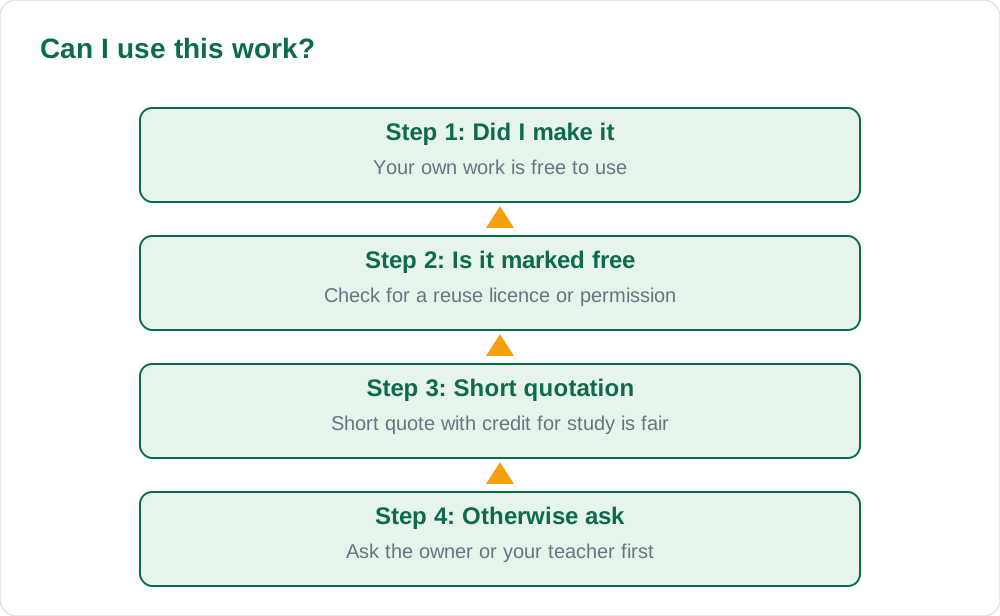
Copyright is the rule that the person who makes something, a photo, a poem, a song, a video, owns the right to decide how it is used. Taking their work and presenting it as your own is called plagiarism, and it is dishonest even when it is easy to copy and paste. In school work, always write in your own words, and when you use a fact, a picture, or a quotation from someone else, say where it came from.
Fair use does allow short quotations for study and comment, with credit, but it does not allow copying whole pages, whole songs, or whole videos. When you are unsure, ask your teacher, or use work that is clearly marked as free to reuse. Giving credit is not just a rule: it is honest, it shows your teacher what you found, and it lets readers check your sources for themselves.
Fact-Checking Before You Forward
False news spreads fast because forwarding is easy and checking takes effort. A shocking headline, a photo without a source, and a message that urges you to forward it quickly are all warning signs. Before you share anything, pause and check: who wrote it, when was it written, and does a trusted source say the same thing? If you cannot answer these questions, do not forward it. A message you did not check can still cause real harm to real people.
Fact-checking is a citizenship duty, not just a school skill. During exams, fake paper leaks and false result dates cause panic, and during emergencies, false warnings cause real danger. Pupils who refuse to forward unchecked news slow down rumours and protect their friends. When a classmate forwards something false, correct it kindly, with a trusted source, instead of mocking them. Everyone is fooled sometimes; kindness keeps the correction welcome.
Your Digital Footprint
Everything you post, like, and comment on leaves a digital footprint: a trail that others, including future teachers and employers, may one day see. Posts feel temporary, but screenshots and saved copies make them long-lasting. Before posting, imagine reading it aloud in front of your class and your family in five years. If that feels uncomfortable, do not post it. A footprint you build with kind, honest, and thoughtful posts becomes an asset, not a worry.
Protecting your footprint also means protecting your accounts. Keep passwords secret, log out on shared computers, and review your privacy settings with a parent or teacher once a term. The safety rules behind these habits are covered in our guide to internet safety rules pupils. Good citizenship and good safety go together: both rest on thinking before you act online.
AI Help: Muse AI
Muse AI is Meta's personal AI assistant, and it can help with rewriting a rough message in a politer tone before you send it. Muse AI does not give official Sindh Textbook Board answers — always verify against your Sindh Textbook Board book and your teacher.
Join Muse with invite code LTGSWD — in the Muse app, go to Settings > Redeem token and enter the code.
Disclosure: LTGSWD is the author's Muse invite code.
5 key points you must know
- Digital citizenship means responsible, respectful, and safe online behaviour.
- Read messages as the receiver will read them, without your tone of voice.
- Write in your own words and give credit for work you borrow.
- Check facts before forwarding; never forward unchecked shocking news.
- Your digital footprint lasts: post only what you would stand by in five years.
Frequently asked questions
What is the difference between digital citizenship and cyber etiquette?
Digital citizenship is the whole idea of behaving responsibly online, including safety, honesty, and respect. Cyber etiquette is the manners part: polite everyday behaviour in messages, comments, and group chats.
Is copying one paragraph from a website plagiarism?
Yes, if you present it as your own writing without credit. A short quotation with credit, used for study or comment, is fair. When in doubt, write it in your own words and name the source.
A friend forwarded a shocking news message. Should I forward it too?
No, not until you have checked it. Look for a trusted source, the author, and the date. If you cannot verify it, do not forward it, and kindly tell your friend you could not verify it.
Can I delete my digital footprint?
Not fully. Screenshots and saved copies can survive deletion, so prevention matters more than cleanup. Think before posting, and keep accounts and privacy settings tidy.
Solved notes — preview free
These guides work best with the solved exercises. Preview the solved notes free on this website — 119 solved notes for Classes 6–10 in Sindhi, Urdu, English and Arabic medium. Or browse the full solved notes catalogue for your class and medium. New solved notes are added regularly — check the catalogue for coming-soon books.