Discipline and Daily Habits for Class 8 Pupils

Discipline means doing the right thing at the right time, even when you do not feel like it. For Class 8 pupils, discipline is not about strict punishment. It is about daily habits that make learning, health, and friendships easier. This guide turns the Class 8 discipline lesson into a morning, study, and sleep routine. You will learn how to plan your day, focus during study, keep your work tidy, and protect your sleep. Small, repeated habits build discipline far better than sudden bursts of effort. Keep your STBB book nearby and choose one habit to start this week.
What Discipline Really Means
Discipline means self-control guided by a clear purpose. A disciplined pupil starts homework without waiting to feel motivated, stops play at the agreed time, and speaks calmly even when upset. Discipline is not the absence of feelings. It is the ability to act wisely despite feelings, using a plan rather than a mood.
Discipline also means consistency. One tidy day does not create a habit. Ten tidy days do. Pupils who build discipline slowly often find school less stressful, because planned work prevents last-minute panic. The solved notes can help you revise the lesson while you build the routine.
- Start tasks on time, even without motivation.
- Follow the plan, not the mood of the moment.
- Finish what you start before switching tasks.
- Review the day briefly and adjust tomorrow.
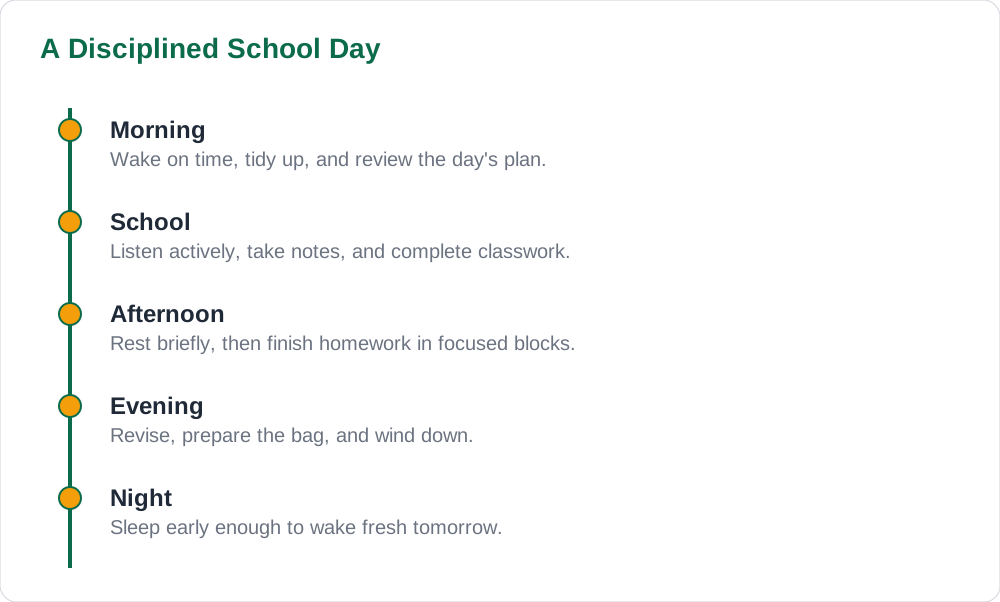
A Calm Morning Routine
A calm morning sets the tone for the whole day. Wake at a fixed time, wash, dress, eat breakfast, and check your bag the night before if possible. Review your timetable and carry only what you need. A rushed morning creates forgotten books and a scattered mind.
Keep the morning routine simple enough to repeat. If you add too many tasks, you will abandon the routine. Choose three anchors: on-time waking, a tidy bag, and a quick review of the day. When mornings run smoothly, you arrive at school calm and ready to learn.
Focused Study Habits
Focused study means one task at a time in a tidy place. Clear your desk, keep water nearby, and remove distractions before you begin. Work in short blocks, such as twenty-five minutes of focus followed by a short break. During each block, stay with the task even when it feels hard.
After each block, check what you completed. Tick off finished tasks and note the next step. This visible progress builds motivation. If a topic confuses you, write the exact question and ask your teacher the next day. For extra revision help, explore the books and the blog.
- Study one task at a time in a tidy place.
- Use short focus blocks with brief breaks.
- Tick off finished tasks to track progress.
- Write down confusing points to ask later.
Tidy Work and Time Management
Tidy work saves time and marks. Keep notebooks labelled, handwriting readable, and homework filed by subject. When you need a note, you should find it in seconds, not after a long search. Tidiness is discipline made visible.
Time management follows the same idea. Use a simple daily list with three priorities: must-do homework, revision, and one personal task. Do the hardest task first when your mind is freshest. If a task takes longer than planned, adjust the list rather than abandoning it. A flexible plan still beats no plan.
Sleep, Health, and Steady Self-Control
Discipline includes caring for your body. Sleep early enough to wake fresh, eat regular meals, drink water, and move during the day. A tired pupil finds it harder to concentrate, control temper, and remember lessons. Protecting sleep is therefore a study habit, not a luxury.
Self-control grows through small daily wins. Choose one habit each week, such as no phone during homework or a tidy desk each night. When you succeed, keep it. When you slip, restart without harsh self-blame. For a companion lesson on steady character, read the guide on patience in school life.
AI Help: Muse AI
Muse AI is Meta's personal AI assistant, and it can help you build discipline by drafting a simple morning, study, and sleep routine for your school week. Muse AI does not give official STBB answers — always verify against your STBB book and your teacher. Always check any lesson summary against your Sindh Textbook Board book before using it in class.
Join Muse with invite code LTGSWD — in the Muse app, go to Settings > Redeem token and enter the code.
Disclosure: LTGSWD is the author's Muse invite code.
5 key points you must know
- Discipline means doing the right thing at the right time, even without motivation.
- A calm morning routine prevents forgotten books and scattered thinking.
- Focused study uses one task, short blocks, and visible progress.
- Tidy notebooks and a simple daily list save time and marks.
- Sleep, meals, and movement protect concentration and self-control.
Frequently asked questions
What is discipline for a Class 8 pupil?
It is self-control guided by a plan: starting on time, finishing tasks, managing time, keeping work tidy, and caring for sleep and health.
How can I build a morning routine?
Keep it simple: wake at a fixed time, prepare the bag the night before, eat breakfast, and review the day's timetable before leaving.
How do I focus during study?
Clear your desk, remove distractions, study one task in short focus blocks, take brief breaks, and tick off finished tasks.
What if I break my routine?
Restart without harsh self-blame. Adjust the plan, choose one small habit to keep, and build consistency again day by day.
Solved notes — preview free
These guides work best with the solved exercises. Preview the solved notes free on this website — 119 solved notes for Classes 6–10 in Sindhi, Urdu, English and Arabic medium. Or browse the full solved notes catalogue for your class and medium. New solved notes are added regularly — check the catalogue for coming-soon books.