Constitution Basics for Pakistan Studies Pupils
Constitution basics for Pakistan Studies pupils begin with a simple picture: a constitution is a country's rule book. It says how the government is formed, what powers each part of government holds, and what rights citizens enjoy. Every modern country has one, written or unwritten. Without it, rulers could do whatever they pleased. With it, power has limits, and citizens have protection. This article explains what a constitution does, what rights and duties mean, and why these ideas matter in daily life. You will also learn how courts guard these rules, and how pupils can study the topic for exams with confidence.
What Is a Constitution?
A constitution is the highest law of a country. Ordinary laws must follow it, and if one clashes with the constitution, the constitution wins. Think of the rules of a game: players may argue about small decisions, but nobody may change the rules mid-game. Likewise, a constitution fixes the basic rules of power so governments change but the framework stays.
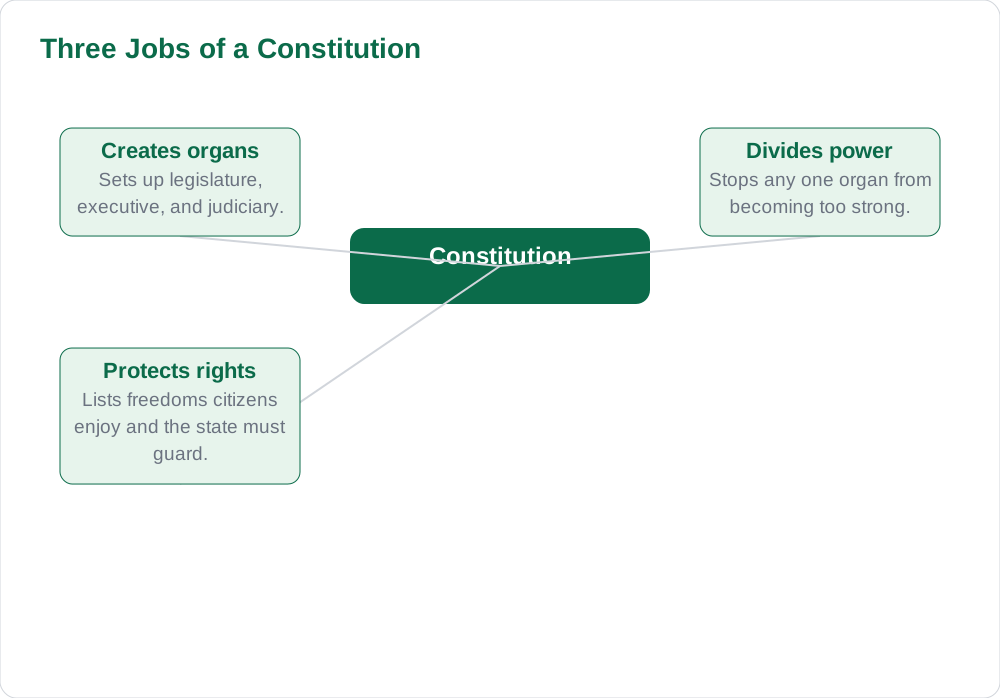
A constitution usually does three jobs. First, it creates the main organs of the state, such as the legislature, the executive, and the judiciary. Second, it divides power between them so that no one organ becomes too strong. Third, it lists the rights of citizens and the duties of the state. Pupils who remember these three jobs already understand the heart of the topic. See the blog listing for more Pakistan Studies guides.
Why Does a Country Need One?
A constitution keeps power limited and predictable. It tells rulers what they may and may not do, and tells citizens what to expect from the state. When power is limited by written rules, people can plan their lives, run businesses, and speak their minds without fear that the rules will change overnight.
A constitution also settles arguments. When two groups disagree about who should decide something, it gives the answer, and when a citizen believes a law is unfair, courts can test it against the constitution. That is why it is called the supreme law: every other law must fit inside it.
Fundamental Rights in Simple Terms
Fundamental rights are the basic freedoms that the constitution guarantees to citizens. They include freedom of speech, freedom of religion, freedom of movement, and equality before the law. They mean that the state cannot arrest a person without a legal reason, cannot force a person to follow a religion, and cannot treat people unfairly because of their background.
Rights are not unlimited. Your freedom ends where another person's begins: a person may speak freely but may not spread harmful lies, and may practise their faith but may not force it on others. Courts protect rights and decide where one person's right stops and another's begins — one of the hardest jobs in any legal system.
- Freedom of speech lets citizens express opinions within the law.
- Freedom of religion lets every citizen follow their own faith.
- Equality before the law means the same rules apply to everyone.
- Protection from unfair arrest guards personal liberty.
Duties of Citizens
Rights come with duties. A constitution expects citizens to obey the law, respect others' rights, pay taxes honestly, and take part in public life. A citizen who enjoys freedom of speech should also listen to other views, and one who enjoys clean streets should not litter them. Rights and duties are two sides of one coin.
Pupils can practise duties in small ways: following school rules, respecting teachers and classmates, keeping public property safe, and helping neighbours. A country works best when millions of small acts of duty add up. For study support, visit the solved notes and the books page.
How to Study This Topic for Exams
Begin with definitions in your own words: one line each for constitution, fundamental rights, and duties. Then add one example for each, such as a right to education or a duty to obey traffic rules. Examples show the examiner you understand the idea, not only the words.
Next, practise short questions: why is a constitution supreme, how are rights protected, and what happens when rights clash? Answer each in four to six lines. Finally, connect the topic to daily life: when you read news about a court decision or a new law, ask which part of the constitution it touches. That habit turns a dry chapter into a living subject.
- Define each term in one line, in your own words.
- Add one real example for every definition.
- Practise short answers of four to six lines.
- Link news stories to the constitutional idea they touch.
AI Help: Muse AI
Muse AI is Meta's personal AI assistant, and it can help you turn constitution basics into a one-page revision sheet by summarising rights and duties in simple lines. Muse AI does not give official STBB answers — always verify against your STBB book and your teacher. For final wording, always check your Sindh Textbook Board book and ask your teacher.
Join Muse with invite code LTGSWD — in the Muse app, go to Settings > Redeem token and enter the code.
Disclosure: LTGSWD is the author's Muse invite code.
5 key points you must know
- A constitution is a country's highest law and rule book.
- It creates the organs of state and divides power between them.
- Fundamental rights are basic freedoms the state must protect.
- Rights come with duties such as obeying the law and respecting others.
- Courts test ordinary laws against the constitution.
Frequently asked questions
What is a constitution in simple words?
It is the highest law of a country. It sets up the government, divides its powers, and lists the rights citizens enjoy.
Why is the constitution called the supreme law?
Because every other law must fit inside it. If an ordinary law clashes with the constitution, the constitution wins.
Are fundamental rights unlimited?
No. Rights are balanced against the rights of others. A person may speak freely but may not harm others with false claims, and courts decide where the limit lies.
What is one duty every citizen has?
Obeying the law is a basic duty. Others include respecting the rights of others, paying taxes honestly, and caring for public property.
Solved notes — preview free
These guides work best with the solved exercises. Preview the solved notes free on this website — 119 solved notes for Classes 6–10 in Sindhi, Urdu, English and Arabic medium. Or browse the full solved notes catalogue for your class and medium. New solved notes are added regularly — check the catalogue for coming-soon books.