Provinces and Cultures of Pakistan: Unity in Diversity
Provinces and cultures of Pakistan — unity in diversity — is one of the happiest topics in Pakistan Studies. Pakistan is home to many languages, dresses, foods, and festivals. Each province has its own colours, yet all of them share one flag, one national story, and one future. This article tours the provinces and their cultures with respect, shows what they share, and explains why diversity is a strength, not a weakness, for the nation. You will visit each province in turn, meet its languages, dress, and festivals, and finish with the shared values that hold the whole country together.
Punjab: Land of Rivers and Warm Welcome
Punjab, the land of five rivers, is known for fertile fields, lively music, and generous hospitality. Punjabi is its main language, and its folk songs, dances, and poetry are famous across the country. Festivals and harvest celebrations bring families together, and Punjabi dishes are served with pride to guests.
Punjab's culture teaches the value of hard work and welcome. Farmers rise early, markets buzz with trade, and visitors are treated as honoured guests. Pupils can note how the rivers that water Punjab's fields also water its poetry: songs about rivers, harvests, and home are part of daily life. See the blog listing for more culture guides.
Sindh: Ancient Heritage and Sufi Spirit
Sindh carries one of the oldest heritages in the region. Its ancient cities, its river, and its Sufi shrines draw visitors from far away. Sindhi is its main language, and Sindhi poetry, music, and crafts — such as ajrak and pottery — are loved across Pakistan. The spirit of Sindh is often linked to tolerance, poetry, and respect for guests.
Sindh's festivals and shrines show how culture and faith blend. People gather to hear poetry, share meals, and remember saints who preached love and peace. A pupil studying Sindh should learn two things: its ancient past and its living traditions of welcome. Visit the solved notes for more study help.
Khyber Pakhtunkhwa: Courage and Hospitality
Khyber Pakhtunkhwa is known for its mountains, its brave traditions, and its famous code of hospitality. Pashto is its main language, and Pashtun culture prizes honour, courage, and keeping promises. Guests in this province are treated with great respect, and a guest's safety and comfort are matters of honour for the host.
The province's crafts, music, and dress reflect mountain life: strong colours, warm fabrics, and sturdy ways. Its people have served the country in the armed forces, in sports, and in public life. Pupils should learn to describe this culture with respect, avoiding stereotypes and celebrating its values.
- Pashto is the main language of the province.
- Hospitality to guests is a point of honour.
- Mountain life shapes dress, crafts, and music.
- Courage and promise-keeping are prized values.
Balochistan: Vast Land, Rich Traditions
Balochistan is the largest province by area, with mountains, deserts, and a long coastline. Balochi and Brahui are among its languages, and its people are known for their dignity, tribal traditions, and warm welcome. Its crafts, embroidery, and music carry the colours of desert and mountain life.
The province holds great natural wealth and great beauty, from its coast to its high valleys. Its people have long lived by herding, farming, and trade. A pupil should remember Balochistan for two things: the size and variety of its land, and the pride and hospitality of its people.
Unity in Diversity: What Holds Us Together
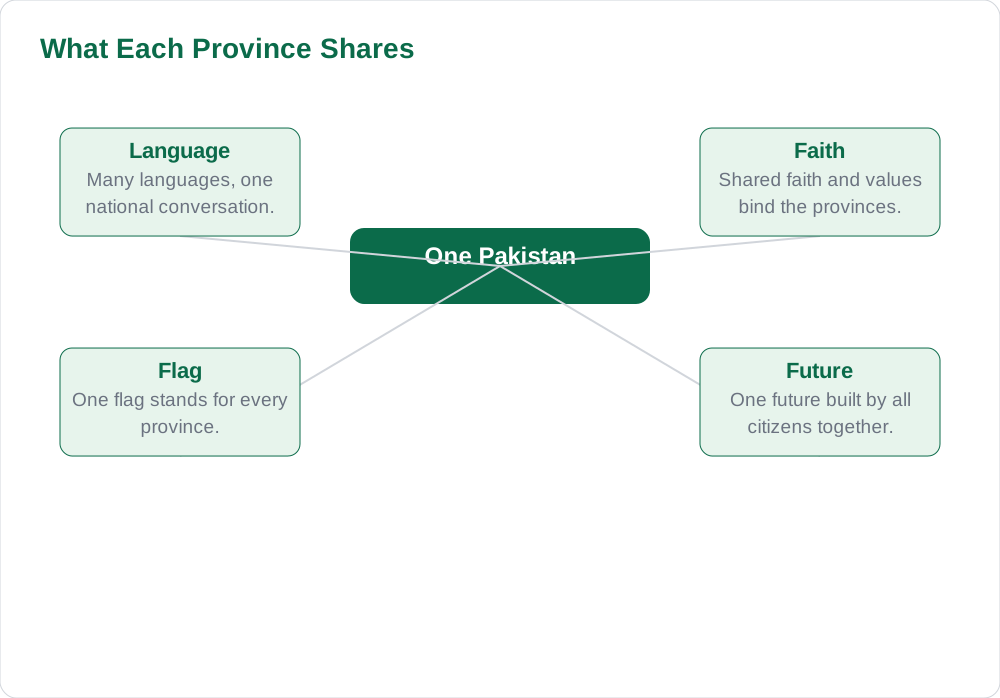
Diversity becomes strength when it is held together by shared values. Pakistanis share a faith, a flag, a national language that connects them, and a history of struggle for independence. They share cricket victories, national days, and the same hopes for their children's future. These shared things are stronger than the differences of language and dress.
Pupils practise unity in daily life: by respecting every language, by refusing to mock another province's dress or accent, and by celebrating each other's festivals. A class that honours every culture in it is a small picture of the country at its best. Learn more on the books page and the about page.
- Respect every language, dress, and accent in your class.
- Celebrate each other's festivals with interest and kindness.
- Remember shared things: flag, faith, history, and hopes.
- Treat diversity as a strength, not a cause of division.
AI Help: Muse AI
Muse AI is Meta's personal AI assistant, and it can help you compare the provinces' cultures in a simple table you can revise from before class. Muse AI does not give official STBB answers — always verify against your STBB book and your teacher. For final wording, always check your Sindh Textbook Board book and ask your teacher.
Join Muse with invite code LTGSWD — in the Muse app, go to Settings > Redeem token and enter the code.
Disclosure: LTGSWD is the author's Muse invite code.
5 key points you must know
- Pakistan's provinces each have distinct languages, dress, and festivals.
- Punjab is known for fertile fields, music, and warm hospitality.
- Sindh carries an ancient heritage and a Sufi spirit of tolerance.
- Khyber Pakhtunkhwa prizes courage, honour, and hospitality.
- Shared faith, flag, history, and hopes hold the diversity together.
Frequently asked questions
What does unity in diversity mean?
It means that people with different languages, dresses, and customs live together as one nation, held together by shared values, a shared flag, and a shared future.
Which languages are spoken in the provinces?
Punjabi in Punjab, Sindhi in Sindh, Pashto in Khyber Pakhtunkhwa, and Balochi and Brahui among the languages of Balochistan, along with many other local languages.
What is Sindh famous for?
Its ancient heritage, its river, its Sufi shrines and poetry, and crafts such as ajrak and pottery, along with a tradition of tolerance and hospitality.
How can pupils practise unity in diversity?
By respecting every language and accent, refusing to mock another province's dress or customs, and celebrating each other's festivals with kindness.
Solved notes — preview free
These guides work best with the solved exercises. Preview the solved notes free on this website — 119 solved notes for Classes 6–10 in Sindhi, Urdu, English and Arabic medium. Or browse the full solved notes catalogue for your class and medium. New solved notes are added regularly — check the catalogue for coming-soon books.